Labels

Wednesday, 27 April 2016

Evaluation - Question 4

How did you use new media technologies in the research, construction, planning and evaluation stages?
To create our blog, we used Google’s blogger application that is in their tree-house of applications.
This application created the ability for us to post individually by tagging the names of the people who contributed to the post. This is so that we could easily determine what was ours and what wasn’t. The blogger application also built on our progress of Pot Luck as it thoroughly showed the in-depth research that we took around the pre-production, during the production & post production. This allows us to keep track of all of the research that we did, which makes our product much more viable and understandable. We also used blogger because the tool was versatile in that I could add images, videos and even external websites into the page. The only problem that I faced with Blogger was that the formatting was very weird with text. The reason for this was because I copied in text from pages or other documents and the HTML behind it would go a bit confused as to which style I wanted. It added time for my research to be added because of this.

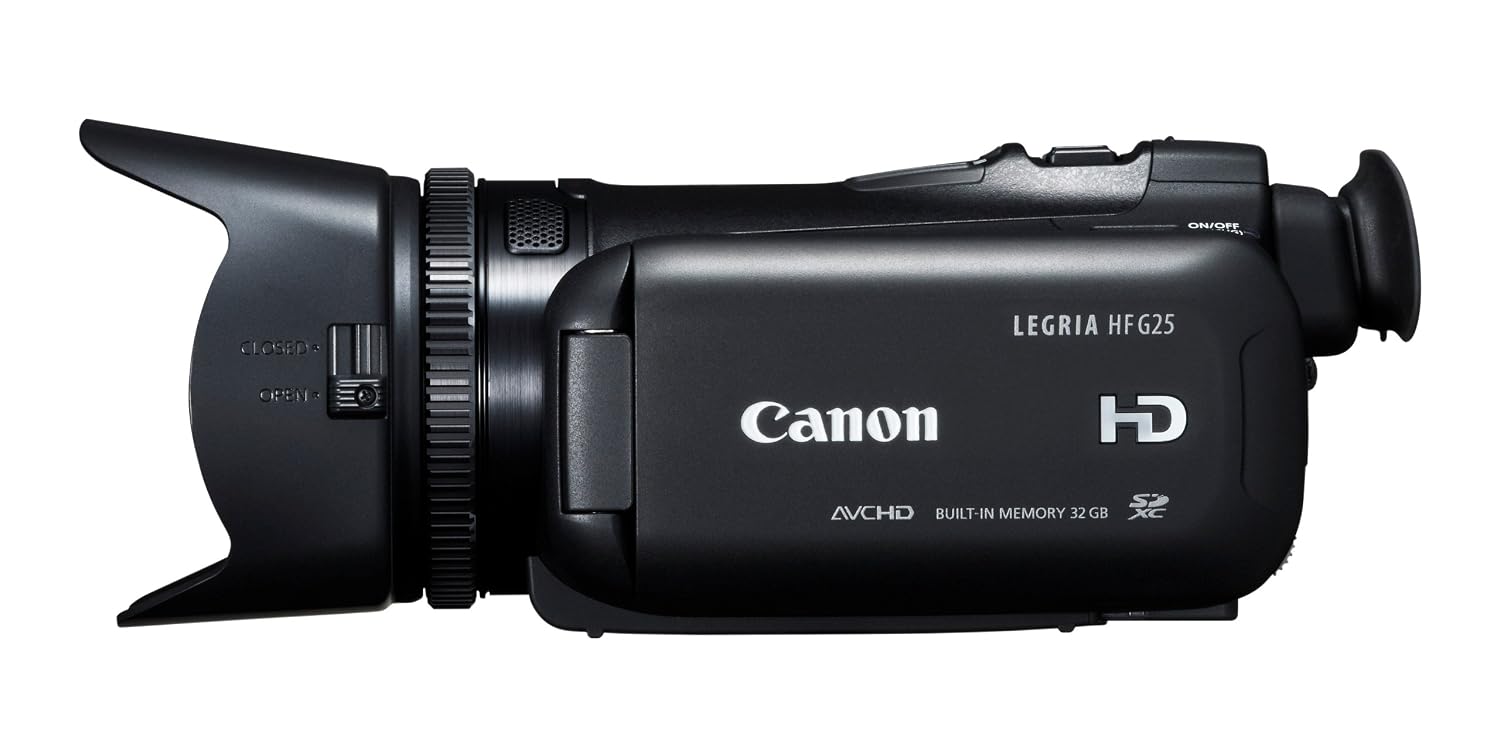
We also used YouTube as our host for our video, this was because this service had the best compression to their servers, which resulted in very little loss for our film resolution. This was significant as we used a Cannon Legia HFG25, which was a good camera for our situation in the filming process.

The camera, the Cannon Legria HFG25, was a perfect camera for our situation, because it allowed our filming space to be small, so that our camera could capture the image as full as we wanted it to be, wether that be a close-up shot or a long-shot from the kitchen. Handheld was also a feature, as we used a shoulder rig, which could easily screw onto the bottom of the Cannon’s camera. The I/O (input/output) was good for the camera, as it recorded video had good audio clarity, but it also had additions to be able to insert external microphones, which we would have done if we needed to for situations such as the outdoors. The only problem that I had with the camera was that the ‘true 1080p’ recording wasn’t amazing. Even though it grasped the image and the colour as perfect as possible, the detail wasn’t amazing in low-light scenes. This was our issue as we didn’t have any external lighting that we could have used to make a scene more detailed, which the camera could have done with having. In the future, I wish to use a Canon 80D, which is a DSLR camera, but yet it has ability to change the lenses to wide-angle.

For the group communication, we took on the approach of Facebook’s messenger service. This was already used in our own lives at some point, so being able to send information, such as text or documents (images, music, clips) would have been easy. Because we all have Facebook, it saved us time for registering a new account or creating something which could potentially be buggy and frustrating for our group.

For our script, we used Celtx, which was the alternative to Microsoft Word or Apple Pages. Celtx was a good application for scriptwriting as it had all of the essential formatting needed to make the script look readable for the actors and directors. The application was bespoke and did the job perfectly.

For our post-production editing, we used Adobe’s suite of products. We used Premiere Pro for stitching our clips together and using cutting tools, also dragging music in externally to the film. This was easy to do, however I didn’t find it as useful as last year’s product, Final Cut Pro. This was the Mac alternative, which was easier to use, and didn’t have as many issues. We also made use of After-Effects that just added some CGI components such as the title screen and the introduction credits to the film. This was done in addition to research into adding moving/anchored text to an object.

For our questionnaires, we used another application made by Google. The product was google forms, this created and rendered our questionnaires with readable results for us to determine our issues which we faced. This was readable by the entire group and the software also allowed us to print out the answers and read them as a group, which made our collaboration

Evaluation - Question 3

Evaluation - Question 2

Evaluation - Question 1

Question 1 - In what ways does the media product use, develop or challenge forms and conventions of real media products?

At a technical level, how well did you observe the conventions of continuity, and the language of film and editing?
The problem we mainly faced with the conventions of continuity is keeping the props in the right place. We had many problems at a technical level where the items were naturally in a different place when we re-filmed some parts of the scenes. This ranges from having the door open when it’s closed in the cut before that, to having items in the wrong place, such as the phone being slightly angled compared to the last cut. This is because of the way, as actors, they act, they don’t exactly consider the items around them and the separate cuts that need to be taken in order for it to work correctly. 
The filming process was quite tactical in that we had little space to move the camera about with the tripod. Because the tripod was quite big, we didn’t have much choice as to how to approach this problem. We decided to use Callum’s brother’s shoulder rig, which was difficult to use because of the way that you had to hold it for long periods of time. This made our arms ache and in reality it probably made the film shakier than it would be if we just held the camera with the strap attached to it.

Editing was also a problem. Because the new editor, Premiere Pro, wasn’t under the same fluidity as the previous one we used, Final Cut Pro. Final Cut Pro was user friendly, it automatically snapped clips together when it needed to be done, which allowed the film to have none of them single blank frame inserts that we accidentally put in. It also knew what format the video was so that we didn’t have to encode it in something higher, with Premiere Pro, we had to guess the resolution of the video that we was intending on uploading. 

In terms of the content, how much does your film reflect or challenge the conventions of the genre you’re working in? Does it fulfil the nature of the film genre or will it subvert expectations deliberately?
We wasn’t sure on how to pursue the genre, this was because our film was originally intended to be a Thriller because we decided we should do a Thriller film before we did anything else. Instead we wrote the storyline and we decided in the end that the film should end up being a Drama. The reason for it being a drama was because it wasn’t ‘thrilling’ or ‘action-packed’ enough for it to be something along that concept. It was a good shout to move the movie into a drama because then our micro-features would have been easier to build into the boundaries of. If the film was a thriller, it wouldn’t be natural for the film to be set inside a typical house. 
I talked about this in a separate blog post
Drama doesn’t have a specific nature, as I described in one of my first posts, figuring out how the codes and conventions of a typical drama film work. The drama genre mainly relies on the acting and the film did perform and support the drama genre. We didn’t want to subvert the genre because anything but a Drama would cause it to be inserted into the different category such as an action. 
The film did have a little bit of an action scene though, which the group debated as it being a part of a drama, just with a little bit more intensity. I agreed with this because of the way that the action genre works. It works in that there’s action-packed movement and props in every scene, this film simply took a household item to put Luke into a coma.
In terms of the context and the content of the film, it didn’t produce a subversion from the agreed genre, Drama.

Are there any elements of deliberate pastiche or parody, where you play with the genre’s codes and history? are there any intertextual moments where you hint at a reference to another film?
We didn’t really try and implement any parodies from any other films. This is because our storyline is quite unique. However, with deeper analysis; I found that there is a couple of intertextual references in the film. One major clip being the montage at the start when Steve is getting ready. Steve is getting ready for a day ahead of him and this is used in one of the references to Shaun of The Dead, when he’s explaining the plan of how to move around the town. This scene includes some witty content, however our film. I wouldn’t directly relate this intertextual reference between the two movies but we did use part of the parody in collaboration with the montage that we did, which turned out to set Steve’s person as just being generic.
After we had the party scene, we decided to use an intertextual reference to Pulp Fiction, where we decided to define Pot Luck. Just like Pulp Fiction decided to define Pulp and Fiction. We thought this was a clever move because it re-establishes the title of the film, making sure the viewer know why everything is happening. Because so far before the definition, it’s the scene of buying a ticket, going to a party and then waking up in the morning. We thought it was a good way of re-establishing the storyline. It was also a part of our title sequence of the movie. Simple in both editorial ways and referencing to the title way.
The credits part of the movie is also a massive influence on many different kinds of films. Sherlock Holmes (BBC version) uses motion tracking for text, which influences the audience in such a way that it’s a modern movie. I decided to take upon that approach, by using text tracking and movement in the credits scene, having objects go over the text. We used this to our advantage on the credits scene, because it keeps the flow of the montage of Ellis getting ready for the day.
The last intertextual reference was one relating to Marvel Movies at the end when they give a cut-scene of something to come in the next film. Legendary endings are used in movies, games & sometimes TV-shows. We decided to do the same at the end of our movie, using Callum, who was in the main part of the film, to be shown at the end with the winning ticket saying “I’ve won, I’ve f***ing won!”. This was one of the comedic elements of the film, only to make the film slightly happier at the end, rather than keeping the audience on a sad state of mind, in that a lottery ticket can ruin peoples lives more than they think.

What kind of audience pleasure are you trying to provide & how confident that you have achieved this?
We’re trying to create a mix of three worlds with this film. One being a thriller, one being a drama and the other being comedic. 
We achieve all three at the right time. The first moment where it is truly a hybrid of both a thriller and a drama. This one being when the party scene happens. This entices the audience in because of the way we edited it. We edited it in such a way that the music and the cuts between one clip and another work together. The party atmosphere also makes you feel like you’re there rather than watching it, because as a party is usually a blur the next day, this part of the movie makes you feel that way.
The second moment is where it becomes a thriller through the act of the fight scene. The fight scene is really intense with the non-diegetic sound achieving an action-packed/tense moment. The camera was moving at such a pace because of the way that Steve was punching Jack, and how they were both knocking about the living room. This scene was a vital part of the film to establish how the two character went from being best buddies to hating each other, to one being dead. Through audience reviews people had stated that they enjoyed this scene the most because of how intense it got in such a short space of time, said in the post-production feedback.
The last moment is where it becomes a comedy. We wanted to add a comedic element into our film because it would lighten the mood after the thriller derived moment of the fight, where it becomes intense. We want to contrast the two, because of the way it’s even more comedic so. 
Richard Dyer was one of the theorists that of utopian pleasure was one of the major aspects that we had to implement into our film. We wanted to literally make sure that we had every aspect of emotional pleasure that the characters would towards a 'winning' ticket. This begins to become surreal, and as such, people enjoy watching surreal content so that they can attempt to relate themselves to it.

Monday, 25 April 2016

Evaluation - Question 4

How did you use new media technologies in the research, construction, planning and evaluation stages?

In research and pre production, most of my research was done on mozilla firefox and then submitted to blogger. We used firefox because it was the most compatible with most resources we were looking for, whether it be sound clips or videos firefox is the best web browser to use. It is also really good for downloading and uploading. Having never used Firefox before I found it really helpful and thought it was a great tool, I'll definitely use it again. Another technology which was crucial in the research stage was Vimeo and YouTube. Most short films are uploaded to the internet because it's much cheaper than distributing them. They are usually released to Vimeo and YouTube which is the reason why I feel that they are so important to the research. Without these films I wouldn't have been able to analyse them and wouldn't have helped our film. See the film here.


Google has been such a big help for this project thanks to it's subsidiaries. Google (the search engine) has obviously helped us so much in terms of finding research and it's subsidiary 'Blogger' has also been essential in displaying our research as you can incorporate so much media with ease. Google forms has been a very important part to research as it has allowed us to create online questionnaires which have been vital to our research. On the whole google have been amazingly helpful in bringing our research from the internet on the the screen you see now. Thank you google. See the final questionnaire here.


This year was our first year using windows to which I wasn't very comfortable with as I am used to using Apple Mac's. I found windows difficult to use and won't use it again as it is much easier on a mac. Maybe this is because I am used to using apple macs but nevertheless, I would much prefer to use them. The script writing application, Celtx was the application we used last year so I was familiar with the program anyway. It was such a good application that was bespoke to our needs. 


During production we used Cannon Legria HFG25. It was an amazing camera and I would definitely use it professionally. It did take a while to get used to the settings and everything but after that, it was really good. Personally, I would have preferred use a DSLR camera but we didn't have the budget so decided against it. That being said a Cannon EOS 700D was used for the logo opening sequence and I found it was easier to work with. That being said, the Cannon Lagria was very good!


Post production we relied heavily on Premiere Pro and didn't edit on anything else. I was experienced with premier pro as I used it for our title sequence last year and I have done other personal projects on it but I wasn't too familiar with it and I'd never done a project as big as this. Personally I much preferred Premire to Final cut pro as it was easier to navigate around and place the footage in. Premier was very high quality along with the camera that was high quality. Shooting and Editing 1080p was amazing. We even had the option to shoot in 4K, that's how good it was. I feel that due to the high quality we were able to produce a good quality short film.


We also used social media to communicate through group work. Even in individual research and activities, we sometimes asked our group what their thoughts and opinions on our work was. The social media networking was an amazing and easy way to work together without traveling far. I feel that it really sped up our research process. Similar to this we used Skype to communicate and often share our computer screens to show the group what we have created. An example of this was when I was creating the poster I shared my screen with Darren to see his views on if anything needed to be added to it, to which he suggested the BBFC certificate which later became a vital part to the poster. This helped speed up the post production massively.


Another amazing technology was the photo editing software we used, Photoshop. I am really experienced with using photoshop and being a graphic designer know what I'm doing but even doing this project I learnt new things you can do with different tools. I found it very helpful and very informative, I would even go as far as to say it was educational. I feel that the use of photoshop allowed us to create an amazing professional posters and promotional products.


In conclusion, I thought that the media technologies we used were so amazingly helpful and vital to the completion of our short film. From the high quality footage to the simple messaging throughout the film process. I feel we have definitely moved on from last year and done so much more int terms of creating and editing and even cinematography due to the camera we used. And I thought it was such a good project.

Evaluation - Question 3

Incase any videos don't work...

Sunday, 24 April 2016

Evaluation - Question 1

In what ways does the media product use, develop or challenge forms and conventions of real media products?

In terms of continuity, we tried our very best to not break it at any point in our short film however there were quite a few times where we did have some continuity problems. Last year when we were creating the two minute opening sequence to a film, continuity was never really something we had a problem with, maybe there were a few breaks but nothing major. This was probably because we filmed all in one day therefore people didn't change their clothes or cut their hair etc. We found this year was a lot harder to keep continuity due to the fact we filmed over several days. Also due to peoples attitude to the film (as it was only a student film for an A level project) they didn't really think about maintaining their look over the few weeks of filming. Here are a few ways we broke continuity.


One of the first was the lighting in the bedroom scene. We had to stop for a problem with the camera. This caused about 30 minutes delay in the filming schedule. This resulted in the light changing outside. This gave us a much lighter shot than the previous. This continuity however was fixed by colour correction. We added a blue/purple filter on the shot to make it look like the previous shots before it. This worked and not many people noticed the slight change in colour.


The next change in continuity was when Steve (the main character) trashed the kitchen in search of the lottery ticket. He sat down and as you can see in the image above there are draws and cupboard doors open wide. The scene then goes on to Steve and Luke fighting and Luke walks into the kitchen again to which the draws and cupboards are closed and the kitchen is suddenly tidy again. The reason for this is the location we filmed in was only given to us with the rule that we leave it as we found it. This led us to be constantly tidying anything that wasn't where it was supposed to be. Unfortunately we just forgot that the room had to stay messy in order to maintain continuity but we forgot. Now the good thing about this is that the shot isn't on long enough for people to notice unless you're looking out for breaks in continuity and when we asked a few people after watching it once, they didn't notice it.


And one final continuity error in our film is again in the fight scene as Luke puts the ticket on the table, you can see the light in the living room is turned off and the door is empty. This remains turned off until Steve is walking back to get the ticket around 20 seconds later. As you can see the light is turned on and there is suddenly a bag on the back of the door. This was because we changed the lighting in the living room whilst filming as it was too dark. This wasn't a good idea. We also forgot to take the bag off the door. Due to these silly mistakes we broke continuity.


In conclusion, we broke continuity a few times but generally we were really good at maintaining it. I think this was because we were looking out for it and trying not to break it. It was very hard with the filming schedule but we managed it and apart from a few problems, we made it.

We didn't break the 180o rule that much in our film. There may have been a few times but that I'm aware of, we didn't break it. To be perfectly honest, we weren't looking out for this as much as breaking continuity I think which might be why I haven't noticed any major breaks. So next time I think we need to be more observant. We have a good shot reverse shot combination when Steve and Luke are talking about the night before in front of the fridge. The only problem with these shots is that I feel they can be edited together much better than they are so that the conversation is more flowing, but other than that, it works well.


Lets take a look at how our film reflects the general conventions of the genre it is in. For starters our film reflects the thriller drama with violence. Violence is always a key element within thriller films. We have a fight scene in our film therefore reflecting the violence of thriller. Supporting this, within drama films, there's always a conflict causing an emotional bond between two characters that you have grown to feel too therefore drawing out your emotions. It does stick to the paradigms of our genre I do think personally. Drama because it's a normal situation that you could actually see yourself in, and thriller not as much I don't think but it does have key aspects of shocking you. I feel our short film definitely follows Todorov's narrative theory, where there's a disruption to the equilibrium. This disruption being the fight and death of Luke, however we don't return to the state of equilibrium therefore in this way I feel it subverts the conventions of his theory as we leave it on a semi-cliffhanger. By this I mean the sirens at the end of the film sort of tell you there's a good chance he goes to prison but it isn't confirmed so the equilibrium doesn't return. You could argue that the sirens symbolise the end of the disruption, Steve gets locked in prison and the world returns to that state but it's all up to how you interpret the ending. One thing in terms of mise en scene that I feel we stuck to very well was by using everyday props. Because drama films are based on real events we tried to make our mise en scene the same by using an average house and the weapon Steve uses is a kitchen pan. We wanted to keep it as real as possible just like the conventions.


We had parodied some films within our film, one of the most apparent is Fight Club. We parodied fight club in a few areas of our film. One of which was the fight scene, which happens in a lot of films so people may not see the relation. But the main reference is in the party scene. In the party scene there is the exact lottery ticket Steve buys that flashes up on the screen twice at two different areas. We put this in as a quick drunken flash as to what Steve is thinking which is the lottery ticket. However this isn't just the reason. The ticket flash is a secret reference to Fight club when Tyler Durden flashes up on the screen. It lasts for around half a second and you only just notice it's him. Similar to our film it explains the story, that Tyler isn't real, he is just in the Narrators head. This is what we were trying to parody in our short film. There are many other references in our film all that can be found here.


I feel people will learn things from our film. The moral we based our story on was: "Don't let greed take over you or it will destroy you". I feel that this film does good in trying to show this moral and what it stands for. I feel that there is a lot to learn from our short film. I do think however that we should have made the relationships between the characters more stronger as it looks like Steve and Luke are just mates and don't really care for each other that much so the fight seems normal however it isn't supposed to be. The reason they're fighting is because greed has taken over their minds which is the moral of the story, don't let it do that.

Personally I don't feel there are many role models within our film because everyone turns bad in the end. This means that there's nothing to look up to. I feel that there isn't any need for a role model in our film due to the storyline.

Finally I want to evaluate the types of pleasure we are trying to give out to the viewers of this film. This is Richard Dyers theory of entertainment. This theory states there are five different audience pleasures. Energy, abundance, intensity, transparency and community. Lets start with energy. Energy is a pleasure that we give the audience a lot. Energy is given in scenes like party scenes, dance scenes, fight scenes and quick paced editing. We have both a fight scene and a party scene in our film that are fast paced editing. I think that we have definitely achieved energy in our film that gets the audience hyped up. 

Then there's abundance is having a lot of things, eg. money or possessions. An example of this is winning the lottery. Now our film is about the lottery and about winning so on one hand you could say that we have abundance in our film however Steve doesn't actually win the lottery so it's not really abundance as he doesn't win. That being said, the recognisable character at the end does win the lottery however you don't see it. So Personally I think that our short film does have aspects of abundance in. 

The next pleasure is intensity. Intensity is found in highs and lows of emotions for example being angry or winning a lot of money. Obviously the fight scene again comes into play in terms of anger and the recognisable character at the end wins the lottery. You could again argue that you don't really feel that emotion and that scene is more for humour rather than intensity but it still falls under the pleasure. 

Transparency is the next pleasure which is understanding the thoughts or actions of the character. This can be through seeing characters writing notes or having voiceovers. IT could also be through showing emotions like crying and laughing. Our film definitely has a voiceover linking it to transparency however I feel emotions aren't as well displayed as they could be. I think this is because we didn't have any professional actors and we aren't actors ourselves so can't display emotions as well. That being said, the voiceovers do give pleasure through transparency.

The final pleasure is community. This is a just a group of people all in one place. This is shown in our film in places like the party scene, where there's a group of friends all hanging out and having fun. Partnerships are another way to show community for example a romance. We were going to feature a romance in our film between Steve and another character however decided against it as we didn't really have enough people or time to show their relationship. Maybe if we had done this then we might have related to the audience more in terms of community but I feel the party and the group of people brings out the community pleasure just as good on it's own.

To conclude, looking at Richard Dyers theory of entertainment in relation to our film, I feel that we have all the audience pleasures within our short film. Some aren't as apparent as others and I feel especially with transparency, we could have done a lot more to show this but we have covered every pleasure and I feel Richard Dyer would be proud of us! We have ended up with a mix of different emotions and pleasures for the audience to deal with and we have a good quality relatable film.

In conclusion of it all I feel that our film reinforces, challenges, develops and subverts the general conventions in many ways. Whether it be through the codes and conventions of genre or the codes and conventions of narrative or through mocking or referencing other films. We've done it all. One thing I wish we'd have taken into consideration is just sat down as a group and looked at all the conventions of the genre, narrative etc. and decided on a direction of the film so that we know where we were going and always referred back to the conventions. Also I wish we would have had more easter eggs within our film. By this I mean references to other films or video games as personally I am an easter egg hunter within films and think they're amazing but who's to say we can't do this for the next film we create? I am pleased with our media product and we have developed something great.